
The buzz phrase in the farming community during the autumn of 2026 has been:
"What a poor harvest it's been."
It is easy to understand why. Across much of the UK, cereal growers have reported disappointing yields following an exceptionally hot and dry growing season. The National Farmers' Union described it as a "hugely difficult and deeply challenging harvest", while the Agriculture and Horticulture Development Board reported yields for wheat, spring barley and oats below historic averages.
However, here at Forest Garden Falmouth, we have experienced our biggest harvest ever.
This year we have enjoyed bumper crops of apples, pears, Asian pears, hawthorn berries, autumn olives, kiwi berries, fuzzy kiwifruit, sweet chestnuts, plumcots, mirabelles, grapes, loganberries, Sichuan peppers and chokeberries.
The contrast raises an interesting question: why have some food-producing systems struggled while others have thrived?
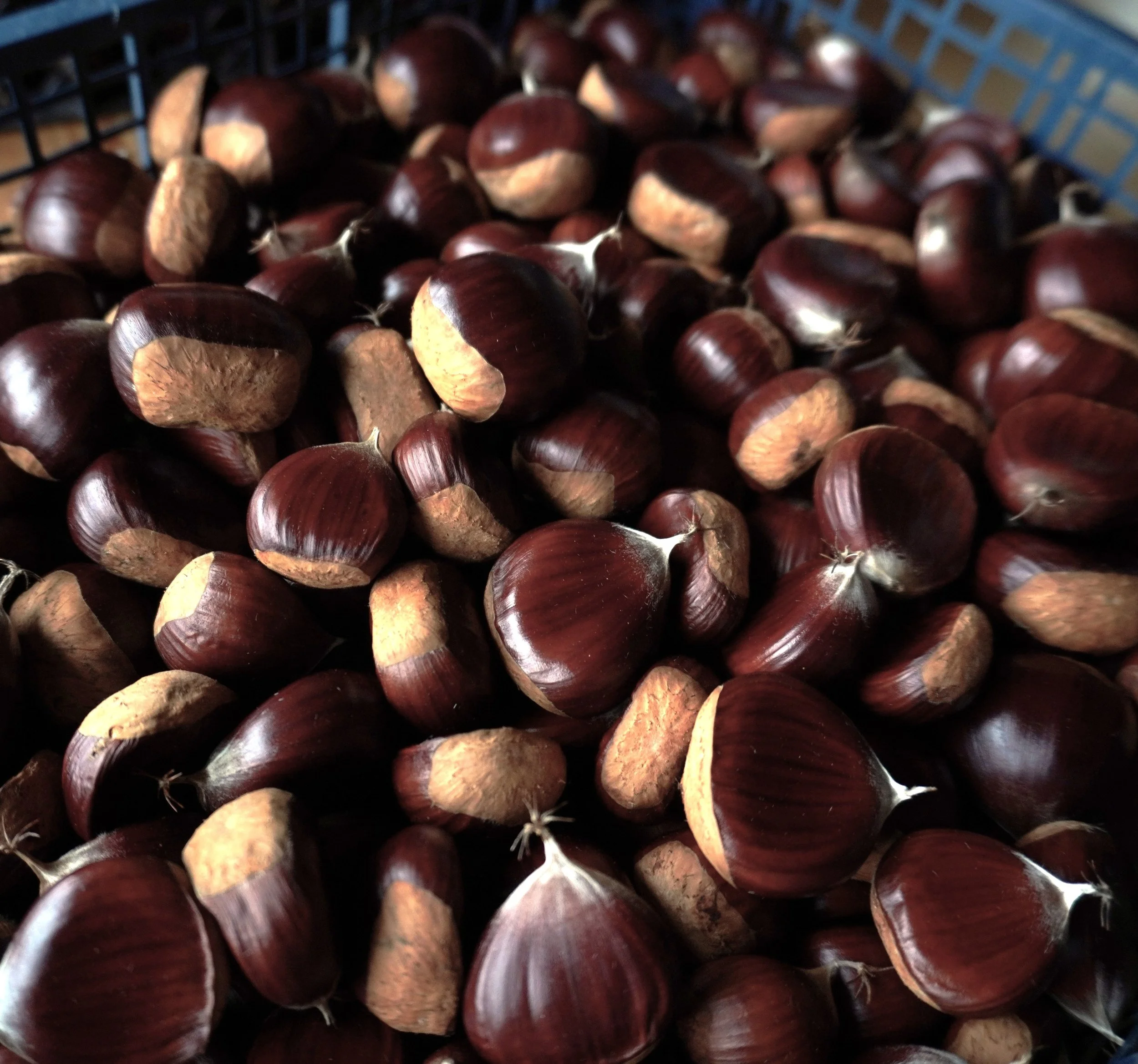
A great harvest of Sweet Chestnut Maravel
For many farmers and growers, it has not only been annual field crops that have suffered. Commercial orchards have also faced challenges from prolonged heat and drought. Establishing seedlings and young plants has become increasingly difficult, while temperatures inside polytunnels and glasshouses have frequently climbed well beyond optimum growing conditions. In many cases, plants have slowed their growth, gone dormant or died from heat stress.
At Forest Garden Falmouth, however, we have needed only minimal supplementary watering. Water was provided to a few newly planted specimens and to some established kiwi vines that showed signs of wilting before quickly recovering. Although perennial crops may temporarily stop growing during extreme heat, they generally resume growth when temperatures fall, often resulting in slightly altered harvest periods rather than crop failure.
Several factors help explain this resilience.
Unlike annual agriculture, forest gardens and food forests do not harvest the whole plant. We harvest fruits, nuts, leaves, flowers and seeds while leaving the plant itself intact and growing. By contrast, crops such as carrots and potatoes require the entire plant to be removed in order to harvest the edible portion.
Most importantly, perennial systems begin each season with mature, established root systems that have often spent many years exploring deep into the soil profile. These roots can access moisture reserves that annual crops and seedlings simply cannot reach.
Also ground cover plays a critical role. Healthy grass cover and specialist mulches help reduce evaporation, moderate soil temperatures and retain moisture during periods of drought.
Species selection is equally important. Rather than attempting to grow the same range of crops regardless of changing conditions, we need to begin working with our changing climate rather than against it. To adapt to increasing weather extremes, we must identify food-producing species that can tolerate greater heat, heavier rainfall, stronger winds and longer dry spells.
For the past sixteen years at Forest Garden Falmouth, I have been trialling species from temperate regions across the world whose climates share similarities with Cornwall's. The aim has been to discover not only what survives here, but what truly thrives.
The results are becoming increasingly encouraging.
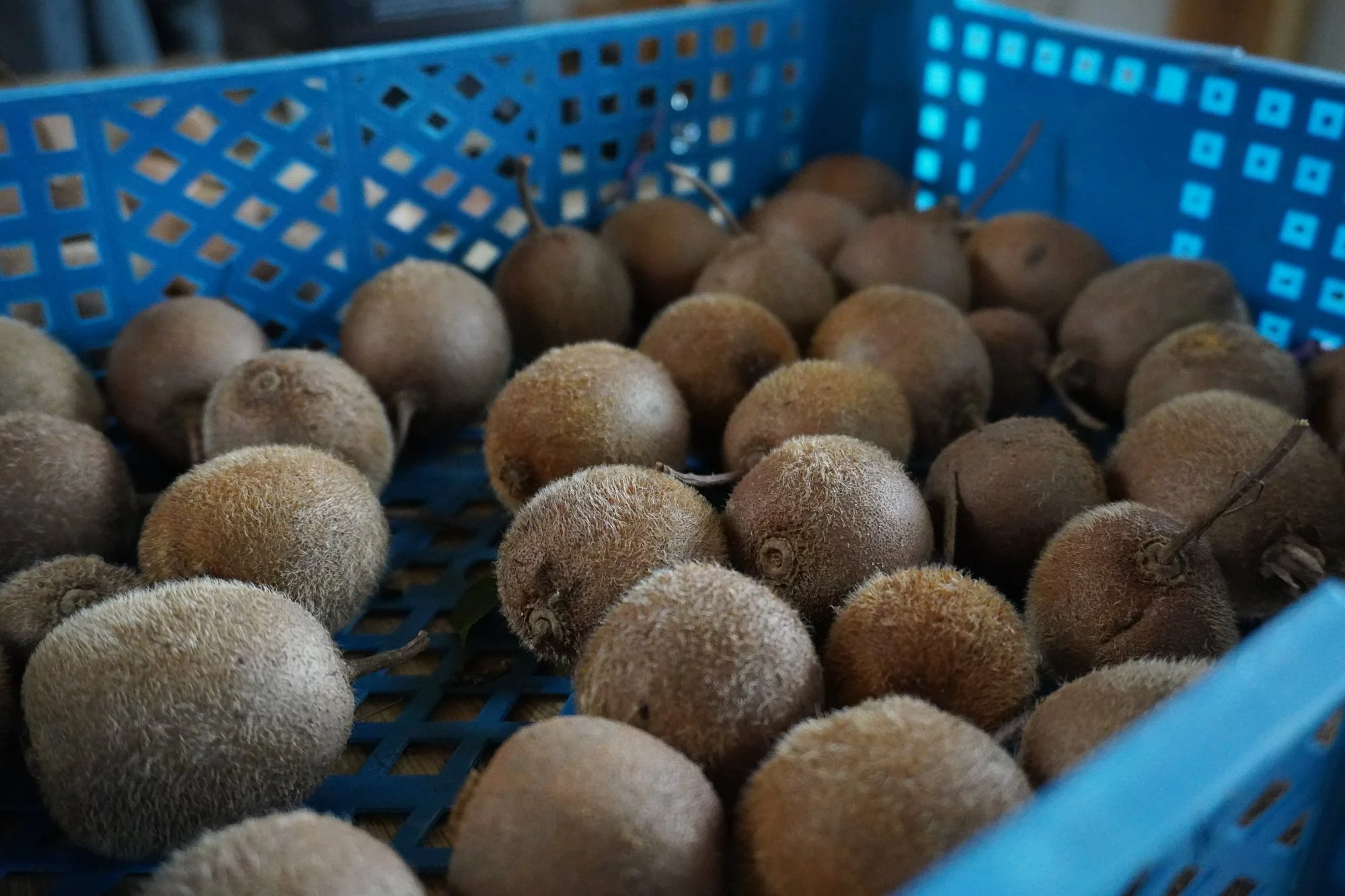
Sweet tasting Kiwi fruit were abundant this summer through into the autumn.
Looking ahead, resilience may become one of the most important considerations for British food production. In the Government's Farming Profitability Review published on 18 December 2025, former NFU president and now Baroness Minette Batters stressed the importance of building resilience into local food production systems.
After decades of relatively stable weather patterns and dependable international supply chains, both are becoming less predictable. Consequently, some of the food and energy security we have taken for granted is becoming increasingly uncertain. This is why I believe now is the time for communities to play a greater role in strengthening their own food security.
Forest gardens and food forests are not a silver bullet for food security, but they can make a significant contribution to local food production, biodiversity, education and community resilience.
Indeed, the lesson of the Second World War remains relevant today: locally grown food can play a vital role in supporting communities during uncertain times.
If you would like to learn how to establish a community forest garden or food forest, please get in touch regarding our forthcoming training course.
Telephone: 07964 750565
Contact: via the Contact Page on this website.
Copyright© Simon H Miles, The Forest Garden Falmouth, 2026